
Tree pruning keeps your trees healthy, safe, and looking their best. When a tree grows unevenly or develops weak limbs, it can quickly become a hazard during strong winds or heavy snow. In Ottawa’s climate, where winter storms are common, proper pruning prevents broken branches, property damage, and unnecessary stress on the tree.
If you notice any of the signs below, it’s time to contact a certified arborist.
1. Branches Touch Your Roof or Power Lines
If branches are close to or touching your roof, gutters, or nearby power lines, pruning should not wait. These limbs can:
- Damage roof shingles or siding
- Block gutters and cause drainage issues
- Knock out power during a storm
A professional arborist can safely remove these branches without harming your property or the tree.
2. Dead or Broken Branches
Deadwood is an obvious warning sign. Branches that are dry, brittle, or leafless in spring need to be removed. If left alone, they can fall unexpectedly and cause injury or damage. A quick inspection by an ISA Certified Arborist identifies which branches are dead and which can be saved.
3. Dense or Overgrown Canopy
A canopy that’s too thick blocks sunlight and air from reaching the inner branches. This creates conditions for mold, pests, and weak growth.
Benefits of thinning the canopy:
- Improves air circulation
- Encourages balanced growth
- Reduces the risk of broken branches
Proper pruning strengthens young trees and helps mature ones stay stable in high winds.
4. Cracked, Crossing, or Rubbing Limbs
When branches rub against each other, the bark wears away and exposes raw wood. These wounds allow moisture, rot, and insects to enter the tree. Selective pruning removes competing limbs and keeps the structure healthy and balanced.
5. Uneven Growth or Heavy Limbs
If one side of a tree looks thicker or heavier, the tree may be off balance. Uneven weight puts stress on the trunk and can lead to splitting during storms. In some cases, cabling and bracing can help stabilize large limbs instead of removing them entirely.
6. Reduced Visibility or Safety Hazards
Trees that block driveways, sidewalks, or street signs should be pruned for safety reasons. Ottawa bylaws require maintaining safe clearance above walkways and roads, and proper pruning ensures compliance while keeping your property accessible.
Common clearance recommendations:
| Area | Minimum Clearance |
|---|---|
| Driveways | 3.0 meters |
| Sidewalks | 2.5 meters |
| Streets | 4.5 meters |
7. Signs of Disease or Pest Damage
A healthy tree shows strong bark, even leaf color, and steady new growth each year. If you start noticing unusual changes, it may be a sign that your tree is under stress from disease or insects. Early pruning and treatment can prevent the problem from spreading to nearby trees.
Common warning signs
- Discolored or spotted leaves
- Peeling or cracked bark
- Sawdust at the base of the tree
- Oozing sap or sticky residue
- Dead branches appearing in the upper canopy
Tree diseases and pests common in Ottawa and Eastern Ontario
| Problem | Typical Trees Affected | What You Might Notice | Recommended Action |
|---|---|---|---|
| Emerald Ash Borer (EAB) | Ash trees | D-shaped exit holes, bark splitting, canopy thinning | Call a certified arborist immediately. Infected trees often need removal or injection treatment. |
| Maple Tar Spot | Maple trees | Round black spots on leaves | Rake and dispose of fallen leaves; no chemical treatment usually needed. |
| Dutch Elm Disease (DED) | Elm trees | Yellowing and wilting from the top down | Requires injection treatment; Arboris provides specialized DED control in Ottawa and Montreal. |
| Anthracnose | Maples, Oaks | Irregular brown patches along leaf veins | Prune affected limbs and remove debris to reduce fungal spread. |
| Cytospora Canker | Spruce, Poplar | Resin flow, sunken bark areas, dying limbs | Prune infected branches and improve air circulation around the tree. |
Preventive steps homeowners can take
- Rake and dispose of fallen leaves to stop fungal spores from overwintering.
- Avoid piling mulch directly against the trunk — this traps moisture and encourages decay.
- Water deeply during dry summers to help trees resist stress.
- Schedule an annual tree health check with an arborist, especially for mature or high-value trees.
When to Call a Certified Arborist
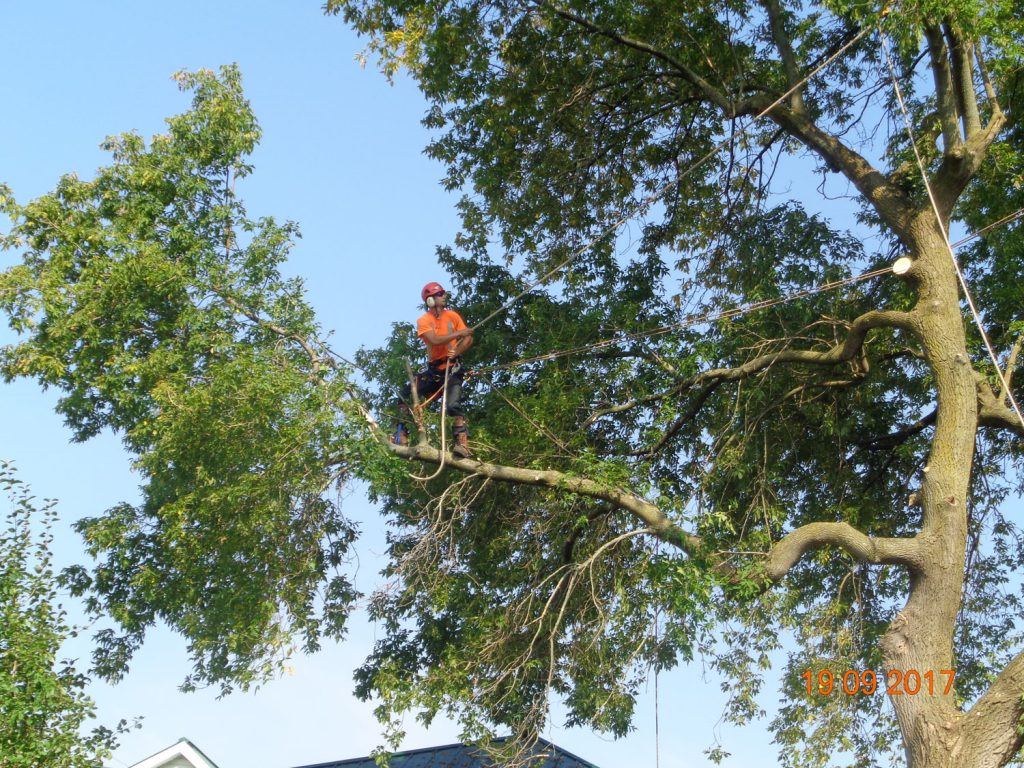
You don’t have to guess whether your tree needs pruning. Certified arborists are trained to recognize early warning signs, perform precise cuts, and keep trees safe for years to come.
Reasons to hire an arborist:
- Professional risk assessment
- Safe equipment and climbing techniques
- Knowledge of Ottawa’s tree species and by-laws
- Proper cleanup and disposal
Arboris proudly serves Ottawa East, Casselman, Rockland, and all of Eastern Ontario, providing pruning, removals, and complete tree care services.