

In Ottawa and across Eastern Ontario, strong winds, heavy snow, and freezing rain are part of life. While these storms are unpredictable, the damage they cause to trees — and nearby homes — often isn’t.
With proper care and preparation, you can greatly reduce the risk of falling branches, broken limbs, or uprooted trees.
Here’s a practical, step-by-step guide to help you prepare your trees before the next storm hits.
1. Schedule a Professional Tree Inspection
The best way to start storm preparation is with a tree inspection by a certified arborist.
They’ll check for structural weaknesses that may not be visible from the ground.
During an inspection, arborists look for:
- Cracked or dead branches
- Weak branch unions or crossing limbs
- Root damage or decay at the base
- Signs of disease or insect activity
- Trees leaning toward structures or driveways

Catching these issues early can prevent major storm damage — and expensive emergency removals later.
2. Prune Weak or Overgrown Branches
Pruning helps trees stand up better against wind and ice. It removes dead, cracked, or poorly attached branches that are most likely to break.
Benefits of pruning before storm season:
- Reduces weight and wind resistance
- Improves balance and stability
- Allows healthy new growth
- Prevents limbs from rubbing or crossing
Focus on limbs hanging over your house, driveway, or power lines. For large or high branches, always call a professional — never prune near electrical wires yourself.
3. Check for Structural Weaknesses
Trees with multiple trunks or heavy limbs growing at sharp angles are more prone to splitting during storms.
An arborist can install cables or braces to provide extra support without harming the tree.
Common trees that benefit from cabling:
- Maple
- Elm
- Oak
- Birch

Cabling and bracing reduce movement and stress during strong winds or freezing rain, helping mature trees stay upright and safe.
4. Maintain Healthy Roots and Soil
Strong roots mean stable trees. Compacted or waterlogged soil weakens root systems and increases the chance of uprooting.
Keep roots healthy by:
- Avoiding heavy traffic or parked vehicles near tree bases
- Spreading mulch to protect soil and retain moisture
- Watering deeply during dry spells (especially before winter)
- Making sure the ground drains well after rainfall
Healthy soil allows roots to anchor firmly, giving your trees better resistance against storm winds.
5. Remove Dead or Dangerous Trees
Sometimes, a tree is simply too damaged or decayed to survive a major storm.
If a tree leans significantly, has deep trunk cracks, or shows signs of internal rot, removal may be the safest choice.
Common signs it’s time for removal:
- Mushrooms or soft wood near the base
- Hollow trunk or large cavities
- Multiple dead limbs or sparse canopy
- Soil lifting around roots after rain
Removing weak trees before storm season prevents unexpected failures and protects nearby healthy ones.
6. Clear Out Fallen Debris Regularly
Branches, leaves, and deadwood around your yard can become dangerous projectiles in high winds.
Keeping your property clear also makes it easier for water to drain properly during heavy rain.
Before storm season:
- Rake and dispose of loose branches
- Trim back shrubs near pathways and driveways
- Check gutters for leaf buildup
- Dispose of old stumps or logs that attract pests
7. Secure Young or Newly Planted Trees
Young trees haven’t yet developed deep root systems, making them especially vulnerable to being uprooted.
To protect new trees:
- Use flexible stakes for support but allow slight movement
- Check ties regularly so they don’t cut into bark
- Add mulch to insulate roots from temperature swings
- Water well before and after major storms
Proper staking and care help young trees establish strong, storm-resistant roots.
8. Keep an Eye on Overhead Clearance
Low-hanging branches over roofs, driveways, and sidewalks can easily break under ice or snow.
Ensure there’s safe clearance between your trees and nearby structures.
Recommended clearances:
| Area | Minimum Distance |
|---|---|
| Rooflines | 3–4 meters |
| Driveways & Walkways | 2.5 meters |
| Power Lines | Contact local utility — never trim these yourself |
Your arborist can safely prune branches to maintain proper clearance without harming the tree’s natural form.
9. Know What to Do After a Storm
After a major storm, inspect your property carefully — but don’t rush to clean up large damage yourself.
What to do safely:
- Stay clear of hanging or broken limbs
- Avoid downed power lines
- Take photos for insurance
- Call a certified arborist for a full assessment
They can determine whether the tree can be saved or if removal is needed for safety.
10. Partner with Professionals You Can Trust
Storm preparation is about prevention — not reaction.
Certified arborists have the training, tools, and experience to strengthen your trees and protect your property before severe weather strikes.
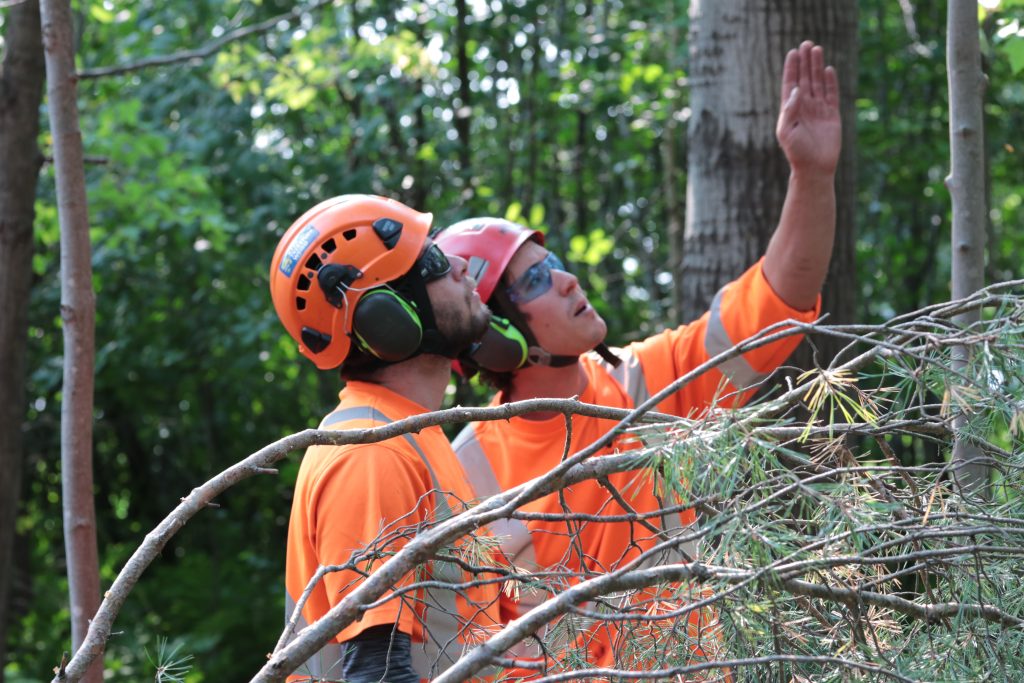
At Arboris, we provide:
- Preventive pruning and structural support
- Tree risk assessments and consultations
- Emergency storm cleanup
- Service across Ottawa, Casselman, Rockland, and Eastern Ontario
Prepare now — and your trees will stand tall, safe, and beautiful through every storm season.