
When It’s Time to Remove a Tree
Tree removal is never the first option, but sometimes it’s the safest and most responsible one. In Ottawa, strong weather, aging trees, and urban growth can all create situations where a tree becomes unstable or dangerous. Knowing when to remove a tree helps protect your property, your neighbors, and nearby healthy trees.
Here’s how to recognize when removal may be the right decision — and why it’s important to call a certified arborist before taking action.
1. The Tree Is Dead or Dying
A dead tree might still stand tall for a while, but it’s only a matter of time before it becomes a hazard. Without live roots and internal moisture, the wood dries out and loses strength. That makes the tree unpredictable during storms or even light winds.
Common signs your tree is dying:
- No leaves or buds during the growing season
- Bark falling off in large sections
- Deep cracks or hollow areas in the trunk
- Fungal growth (mushrooms) at the base
Removing a dead tree early is safer and usually less expensive than waiting until it collapses.
2. The Tree Is Severely Damaged
Not all storm damage can be fixed with pruning. If more than 50% of the canopy or major limbs are broken, the tree’s structure and stability are likely compromised.
Severe damage can come from:
- Heavy ice or snow
- Lightning strikes
- High winds
- Vehicle or construction impact
A professional arborist can assess whether structural support is possible, but in many cases, full removal is the only safe option.
3. The Tree Is Leaning Suddenly
A natural lean that’s been there for years is usually harmless. But if a tree starts leaning suddenly — especially after a storm or heavy rain — it could mean the roots are failing.
Warning signs include:
- Soil lifting or cracking around the base
- Exposed roots on one side
- Fresh lean appearing within days or weeks
Leaning trees with disturbed roots are very unstable and can fall without warning. Call a certified arborist immediately for an inspection.
4. The Roots Are Damaged or Restricted
Roots are the foundation of every tree. If they’ve been cut, compacted, or exposed by construction or landscaping, the tree may no longer have enough support or water flow to survive.
Root issues often appear as:
- Yellowing leaves in midsummer
- Dieback from the top of the canopy
- Fungal growth or decay near the base
Once root damage reaches a certain level, pruning or fertilizing can’t restore stability. Removal may be necessary to prevent property damage or injury.
5. The Tree Is Too Close to Structures or Utilities
Sometimes a tree grows in the wrong place. Roots can lift driveways, crack foundations, or interfere with underground pipes. Overhead branches can threaten power lines or roofs.
In Ottawa, utility companies require safe clearance around power lines, and homeowners can be held responsible for unsafe trees that interfere with them.
If you notice:
- Branches near hydro lines
- Cracks in pavement near a large tree
- Roots pressing against foundations
…it’s time to have the tree professionally evaluated.
Tree Pruning in Ottawa can sometimes solve the issue — but if roots or structure are compromised, removal may be safer.
6. The Tree Is Infected Beyond Recovery
Some tree diseases can be treated, but others spread too quickly or destroy the wood from the inside. Ottawa and Eastern Ontario have seen major issues with Emerald Ash Borer and Dutch Elm Disease, both of which can kill mature trees within a few seasons.
Advanced infection signs:
- Deep vertical cracks in the trunk
- Bark splitting and peeling
- Sparse, thinning canopy
- Branches dying from the top down
If treatment is no longer effective, removing the tree prevents the disease from spreading to nearby healthy ones.
7. The Tree Has Become a Safety Risk
Even a healthy tree can become dangerous if it’s in the wrong location. Trees that block visibility at driveways or intersections, or those hanging over public walkways, can pose a liability risk.
Other safety red flags include:
- Large cavities in the trunk
- Multiple trunks with weak connections
- Noticeable movement at the base during wind
If a tree threatens your home, power lines, or neighboring property, it’s best to have it inspected and, if necessary, removed before an accident happens.
8. The Tree No Longer Fits the Landscape
In some cases, a tree may simply outgrow its space or prevent other plants from thriving. When a single tree overshadows the entire yard, removing it can restore balance, sunlight, and room for new growth.
Homeowners often choose to replace an aging or oversized tree with a smaller, native species that’s better suited for the property.
Work With Certified Arborists
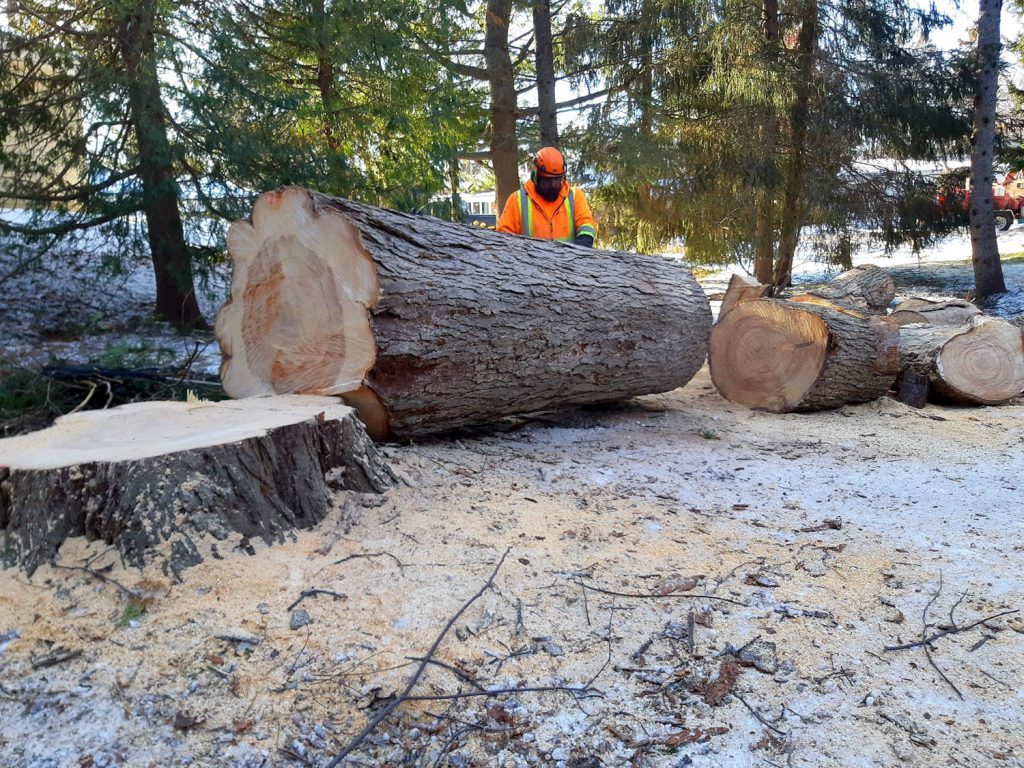
Tree removal can be dangerous work — especially near buildings, power lines, or public areas. Certified arborists have the training, equipment, and insurance needed to remove trees safely and efficiently.
At Arboris, we provide:
- Professional inspection and risk assessment
- Safe rigging and climbing techniques
- Complete debris cleanup
- Stump grinding and replanting options
Every removal is done with safety, respect, and minimal impact on your property.
Arboris proudly serves Ottawa East, Casselman, Rockland, Hawkesbury, and surrounding areas. Whether it’s a storm-damaged tree or one that’s simply outgrown its space, we’ll help you make the right decision for your property and the environment.